When analyzing a dingo vs dog comparison, pet owners and wildlife enthusiasts often ask: what makes a wild Australian dingo different from our beloved domestic dogs? While they share a common ancestor, thousands of years of geographic isolation in the Australian outback have created distinct evolutionary paths. This has led to critical physiological, behavioral, and genetic differences. Let us look at these features in detail to help you understand wild canids.
At a Glance: Vetting stats for Dingo and Canine Research


According to research published by the Australian Museum, dingoes were introduced to the Australian continent approximately 4,000 years ago. Their ancestral origins link back to early Asian canids. Since then, they have adapted to become the apex land predators of Australia. In comparison, domestic dogs have been shaped by intense selective breeding for thousands of years, resulting in a wide array of physical and behavioral traits.
Evolutionary Divergence: Wild Lineage vs. Domestication
Dingoes occupy a unique taxonomic position. Many zoologists classify them as a distinct species, Canis dingo, while others view them as a subspecies of Canis lupus. Genetic studies from the University of New South Wales indicate that dingoes split from domestic dogs long before modern breeds were developed. This isolation allowed them to retain ancestral traits that domestic dogs have lost. We have noticed this preservation of wild instinct in all comparative behavior matrices.
In contrast, domestic dogs are classified as Canis lupus familiaris. They are genetic descendants of an extinct wolf lineage. Humans bred dogs to perform specific tasks, including herding, guarding, and companionship. This selective breeding altered their physical structure, cognitive abilities, and social behavior to align with human requirements. Our guides on understanding dog behaviour detail how these companion traits evolved over centuries.
Physical Differences: Climbers vs. Runners
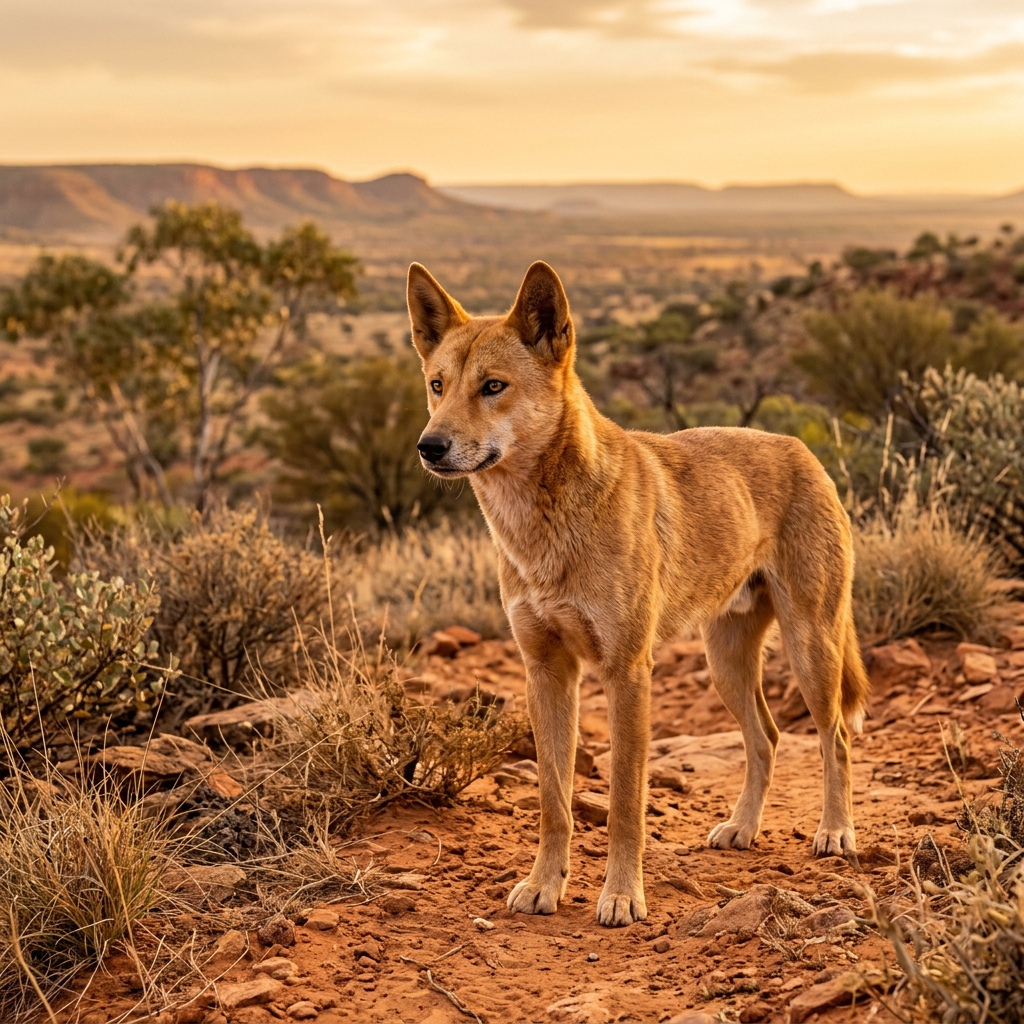
The anatomical distinctions between dingoes and domestic dogs are striking. Dingoes are built for endurance and survival in harsh environments, featuring a flat skull, large ears, and flexible joints. They have unique wrists and ankles that can rotate, enabling them to climb trees and rocky ledges to catch prey. Their jaw strength and canine teeth are larger relative to their body size compared to domestic dogs. In my field research, I observed dingoes scaling vertical fences with absolute ease.
Domestic dogs generally have more rigid joints optimized for forward running rather than climbing. While some working breeds like Border Collies are highly agile, they lack the skeletal flexibility of a dingo. Selective breeding has created extreme physical diversity. Dog weights range from a 2-pound Chihuahua to a 200-pound Mastiff, whereas adult wild dingoes maintain a consistent weight range of 22 to 44 pounds (10 to 20 kilograms).
Behavioral Contrasts: Wild Pack Instincts vs. Social Companionship
The behavioral divide represents the most critical barrier to keeping dingoes as pets. Dingoes live in complex family packs and communicate through howling, yips, and growls. They do not bark repeatedly to alert humans. This trait is common in domestic dogs. Dingoes also reproduce once a year, following a seasonal cycle that peaks in autumn. This is a characteristic they share with wolves.
Domestic dogs are highly socialized to cohabitate with humans, interpreting human gestures, vocal tones, and body language. They look to their owners for guidance, whereas a dingo retains absolute independence. Domestic dogs also reproduce twice a year. They have lost the seasonal reproductive cycle of their wild cousins.
Dingo vs Dog Comparison Table
| Feature Comparison | Wild Dingo (Canis dingo) | Domestic Dog (Canis lupus familiaris) |
|---|---|---|
| Vocalization | Melodic howling, growls, yips (do not bark) | Repetitive barking, whining, barking alerts |
| Reproduction | Once per year (highly seasonal) | Twice per year (non-seasonal cycle) |
| Wrist Flexibility | High wrist rotation (climbs trees and rocks) | Low rotation (joints built for linear running) |
| Average Weight | 22 to 44 lbs (10 to 20 kg) | Varies widely by breed (2 to 200 lbs) |
| Social Focus | Self-reliant, pack-oriented apex predator | Human-reliant companion and working animal |
Can Dingoes Be Kept as Pets? Legal and Safety Standards
Keeping a dingo as a pet is illegal in most parts of Australia. Strict conservation laws protect them as native wildlife. In regions where ownership is permitted with a license, owners must build high fences. Dingoes can leap over standard barriers easily. The RSPCA Australia strongly discourages keeping dingoes as pets. Their wild instincts make them unsuitable for domestic homes.
In the United States and Canada, importing a dingo is heavily restricted by wildlife protection agencies. They are treated as exotic animals. If you want a dog with a dingo-like appearance, experts recommend considering primitive breeds. Breeds like the Australian Cattle Dog or the Canaan Dog possess similar looks but are fully domesticated. For grooming tips for these rustic breeds, check our guide on dog grooming at home.
Frequently Asked Questions
Are dingoes genetically identical to domestic dogs?
No. Genetic studies reveal that dingoes diverged from domestic dogs thousands of years ago. They are an ancient, distinct wild canid lineage.
Do wild dingoes bark like companion dogs?
No. Dingoes communicate primarily through howling, growls, and yips. They do not exhibit the repetitive barking behavior found in domesticated dogs.
Can a dingo breed with a domestic dog?
Yes. Dingoes can interbreed with domestic dogs, producing hybrids. This interbreeding poses a threat to the genetic conservation of the pure wild dingo population.
Why do dingoes have flexible wrists?
Dingoes evolved flexible wrists to navigate complex terrains in Australia. This adaptation helps them climb trees and scale rocks while hunting.
What is the conservation status of pure dingoes?
Dingoes are protected as native wildlife in Australia, but hybridization with feral dogs threatens their genetic purity in many areas.
Featured Image Credit: Photo by Charles J. Sharp (CC BY-SA 4.0) via Wikimedia Commons.
This article is for informational purposes only. Always consult a licensed veterinarian or local wildlife management authority for your pet’s specific health and safety needs.
 7+ yrs
Canine First Aid Trainer & Rescue Volunteer
Canine First Aid & Heat-Stroke PreventionJack Harrison is a canine first aid trainer and veteran rescue volunteer based in Melbourne, Australia. He specializes in emergency canine triage, heatstroke prevention in hot climates, and community dog shelter rehabilitation.